SEO vs AEO vs GEO: What's the Difference?
Last verified: 2026-09-20. AI platform behavior changes frequently — verify current details on the respective platform's site.
SEO optimizes for ranking in search results, AEO optimizes for being the extracted answer in featured snippets and PAA boxes, and GEO optimizes for being cited in AI-generated answers from ChatGPT, Perplexity, and Google AI Overviews.
Key Takeaways
- SEO focuses on page-level ranking, AEO on answer extraction, and GEO on brand-level visibility in generative AI outputs.
- Each builds on the previous — you cannot skip SEO and jump to GEO without a crawlable, well-structured foundation.
- Content strategy is the connective layer that feeds all three disciplines with the right information in the right format.
- No consultant or strategy can guarantee citations in ChatGPT, Perplexity, or Google AI Overviews — GEO improves the likelihood, not the outcome.
- Most businesses need all three working together rather than choosing one over the others.
SEO helps search engines discover, understand, and rank your pages. AEO helps the information within those pages get extracted and displayed as direct answers. GEO takes a broader view of how your brand, its expertise, and its authority are understood and represented within generative AI search experiences. They are not competing strategies — they are three layers of modern search visibility that build on each other.
Comparison table
| SEO | AEO | GEO | |
|---|---|---|---|
| Definition | Optimizing pages for discovery, understanding, and ranking in search results | Structuring content so search and answer systems can extract and present direct answers | Improving how a brand, its entities, and its authority are understood and represented in generative AI search |
| Primary goal | Rank pages for relevant queries | Be the answer, not just the result | Be understood, trusted, and referenced by AI systems |
| Where it applies | Traditional search results, image search, local search | Featured snippets, People Also Ask, voice search, answer boxes | Google AI Overviews, ChatGPT, Perplexity, Gemini, and other generative search experiences |
| Key metrics | Rankings, organic traffic, impressions, click-through rate | Snippet capture rate, PAA placements, answer-box visibility, zero-click visibility | AI citation frequency, brand mention accuracy, entity representation, share of voice in AI responses |
| Example tactic | Title tag optimization, internal linking, page speed improvements | [FAQ schema](https://schema.org/FAQPage), concise question-answer formatting, definition blocks | Entity clarity via Organization schema, digital PR for authoritative mentions, original research that AI engines cite |
When to use which
You do not choose between these — you layer them. SEO is always the starting point. If your site is not crawlable, fast, and well-structured, nothing else matters. Every business with a website needs SEO as a baseline. If your audience asks question-based searches — "how does," "what is," "why does" — then AEO becomes essential. This is particularly true for service businesses, B2B companies, and anyone whose customers research before buying.
GEO matters when your audience is increasingly using AI-assisted search to find recommendations, compare options, or understand topics. If your customers are asking ChatGPT for tool recommendations or seeing AI Overviews in their Google results, GEO ensures your brand is part of the conversation those systems draw from. The urgency depends on your industry and how quickly your audience has adopted generative search.
How they work together
These three disciplines are not either/or choices. SEO provides the technical foundation — crawlability, indexation, site structure, page speed. AEO builds on that foundation by ensuring the content within your pages is structured for answer extraction. GEO extends further by addressing how your brand exists as an entity across the broader web — not just on your own site but across authoritative third-party sources, publications, and profiles.
Content strategy is the connective tissue. It decides what information should exist, in what format, and how pieces connect — feeding all three disciplines with the right material. SEO consulting ensures that material is discoverable. AEO consulting ensures it is answer-ready. GEO consulting ensures the broader ecosystem supports AI visibility. A business that addresses all three builds a search presence that works across traditional results, answer features, and generative AI — the full spectrum of how people now find information.
Frequently Asked Questions
SEO helps search engines discover, understand, and rank your pages. AEO helps the information within those pages get extracted and displayed as direct answers. GEO takes a broader view of how your brand, entities, and authority are understood and represented within generative AI search experiences. They overlap and build on each other.
Most businesses benefit from addressing all three rather than choosing one. SEO is the foundation — without crawlable, well-structured pages, AEO and GEO have nothing to work with. AEO ensures your content answers questions clearly. GEO extends visibility into generative search. The mix depends on your audience and where they search.
No. No consultant or strategy can guarantee inclusion in any specific AI platform. GEO improves the likelihood that your brand is understood and represented accurately by strengthening entity clarity, content quality, authority, and external evidence. The goal is to make your expertise as easy as possible for generative systems to interpret.
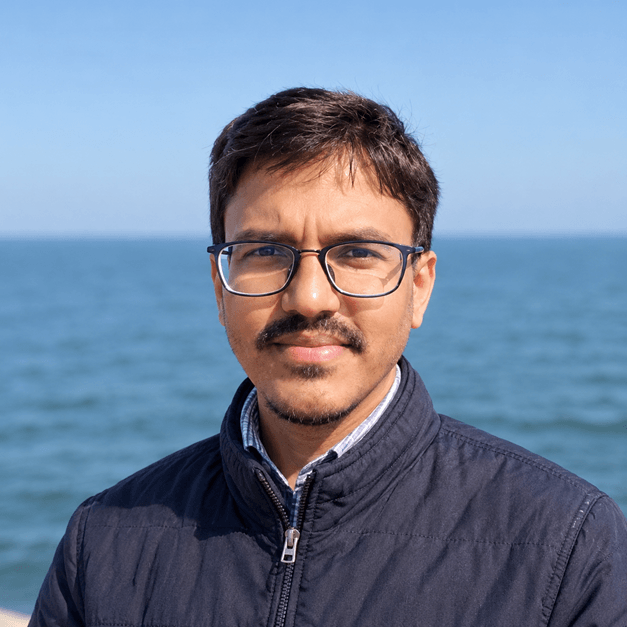
Izajul Haque
SEO, AEO & GEO consultant. I help businesses get discovered, understood, and cited across Google, AI Overviews, ChatGPT, and Perplexity. More about Izajul →
Try the related tools
Keep reading
Let's talk
Your next customer might not click a blue link — they'll ask an AI. Be the answer.
Book a free strategy call and I'll audit your visibility across Google, AI Overviews, ChatGPT, and Perplexity — then map out exactly what it takes to be found and cited.