How to Structure Multilingual Content for SEO and GEO
Last verified: 2026-09-20. AI platform behavior changes frequently — verify current details on the respective platform's site.
Structure multilingual content using hreflang tags for language and regional targeting, separate URLs or subdirectories per language, localized content rather than machine translations, and language-specific schema markup to help both Google and AI engines serve the right version.
- Step 1: Plan your URL structure for multilingual content
- Step 2: Create market-specific content, not translations
- Step 3: Implement hreflang tags reciprocally across all versions
- Step 4: Set self-referencing canonicals per language version
- Step 5: Implement schema markup per language version
- Step 6: Write extractable answer blocks in each language
- Step 7: Audit multilingual content with per-language checks
- Common mistakes
Key Takeaways
- Multilingual content must be market-specific, not just translated — each language version needs unique content addressing local search behavior and trust signals.
- hreflang tags must be reciprocal and include x-default — incomplete hreflang clusters cause language-mismatch rankings across all versions.
- Schema markup must be implemented per language version, with localized values (name, description, serviceType in the local language).
- AI engines extract content per language — a 40-60 word answer block in French is what French AI queries extract, not the English version.
- Canonical tags must be self-referencing per language version — do not canonical all language versions to the English page.
Multilingual content that ranks in Google and gets cited by AI engines requires more than translation. It needs market-specific content, hreflang tags, per-language schema, self-referencing canonicals, and extractable answer blocks in each language. This guide walks through the complete framework for structuring multilingual content for both traditional SEO and GEO.
Step 1: Plan your URL structure for multilingual content
Choose a URL structure for your language versions:
| Structure | Example | Best For |
|---|---|---|
| Subdirectory | example.com/fr/page | Most sites — easy to manage, shares domain authority |
| Subdomain | fr.example.com/page | Sites needing separate server infrastructure per language |
| Separate domain | example.fr | Sites needing maximum local signal (ccTLD) |
For most localization and translation agencies, subdirectories are the best choice. They share domain authority, are easy to manage, and work well with hreflang.
Document the exact URL for each language version:
English:  https://yourdomain.com/services/localization
French:   https://yourdomain.com/fr/services/localisation
German:   https://yourdomain.com/de/services/lokalisierung
Spanish:  https://yourdomain.com/es/services/localizacion
Japanese: https://yourdomain.com/ja/services/localization
These are the values you will use in hreflang and canonical tags. They must be consistent across all signals. See how to set up hreflang for multilingual sites for the full hreflang guide.
Step 2: Create market-specific content, not translations
The most common multilingual SEO mistake is translating English content into other languages. Translation produces content that reads correctly but does not match local search behavior or trust signals.
What differs by market:
| Element | English Version | French Version |
|---|---|---|
| Primary keyword | "video subtitling" | "sous-titrage vidéo" |
| Search behavior | "best translation services" | "meilleure agence de traduction" |
| Trust signals | English client testimonials | French client testimonials |
| Case studies | US/UK clients | French clients |
| Industry references | US standards (ADA, WCAG) | French standards (Loi Handicap) |
| Compliance | US regulations | EU regulations (GDPR, Loi Renseignement) |
Write for the market, not from the source:
<!-- French page (written for the French market, not translated) -->
<title>Services de Sous-titrage Vidéo | Votre Entreprise</title>
<h1>Services de Sous-titrage pour Contenu Vidéo</h1>
<p>Services de sous-titrage professionnels pour plateformes de streaming, vidéos d'entreprise, et contenu e-learning. Conformité aux normes françaises et européennes d'accessibilité.</p>

<h2>Qu'est-ce que le sous-titrage ?</h2>
<p>Le sous-titrage est le processus d'ajout de texte synchronisé sur le contenu vidéo, traduisant le dialogue parlé en texte lisible à l'écran. Le sous-titrage professionnel inclut le timecoding, les coupures de ligne, l'optimisation de la vitesse de lecture et l'adaptation culturelle.</p>
Use native-speaker writers who understand the local market. Machine translation produces content that Google can detect as auto-generated and that AI engines will not cite. See how to do local and international SEO for market-specific content strategy.
Step 3: Implement hreflang tags reciprocally across all versions
Every page in a multilingual cluster must reference all other versions:
<!-- On the French page /fr/services/localisation -->
<link rel="alternate" hreflang="en" href="https://yourdomain.com/services/localization" />
<link rel="alternate" hreflang="fr" href="https://yourdomain.com/fr/services/localisation" />
<link rel="alternate" hreflang="de" href="https://yourdomain.com/de/services/lokalisierung" />
<link rel="alternate" hreflang="es" href="https://yourdomain.com/es/services/localizacion" />
<link rel="alternate" hreflang="x-default" href="https://yourdomain.com/services/localization" />
The French page must reference the English, German, and Spanish versions — and each of those must reference the French version. Missing reciprocal tags cause Google to ignore the entire hreflang cluster. Use the hreflang Tag Checker to verify every page returns the complete reciprocal set.
Step 4: Set self-referencing canonicals per language version
Each language version must have a self-referencing canonical:
<!-- On the French page /fr/services/localisation -->
<link rel="canonical" href="https://yourdomain.com/fr/services/localisation" />

<!-- On the German page /de/services/lokalisierung -->
<link rel="canonical" href="https://yourdomain.com/de/services/lokalisierung" />
Do NOT do this:
<!-- Wrong: canonicaling all versions to the English page -->
<link rel="canonical" href="https://yourdomain.com/services/localization" />
This tells Google the French and German versions are duplicates of the English page, which suppresses their rankings in local search results. The canonical URL must match the hreflang URL exactly. See how to set up canonical tags correctly and use the Canonical Tag Checker.
Step 5: Implement schema markup per language version
Schema must be localized for each language version:
<!-- French page schema (in French) -->
{
  "@context": "https://schema.org",
  "@type": "Service",
  "name": "Services de Sous-titrage",
  "serviceType": "Sous-titrage",
  "provider": {
    "@type": "Organization",
    "name": "Votre Entreprise",
    "url": "https://yourdomain.com/fr"
  },
  "description": "Services de sous-titrage professionnels pour plateformes de streaming, vidéos d'entreprise, et contenu e-learning. Conformité aux normes françaises d'accessibilité.",
  "areaServed": "France, Europe"
}
The name, serviceType, and description must be in the local language. Organization schema sameAs links can be the same across versions (they point to your global social profiles), but service-specific schema must reflect the local language content. See schema markup for AI visibility for the full schema strategy.
FAQ schema must also be localized:
{
  "@context": "https://schema.org",
  "@type": "FAQPage",
  "mainEntity": [
    {
      "@type": "Question",
      "name": "Qu'est-ce que le sous-titrage ?",
      "acceptedAnswer": {
        "@type": "Answer",
        "text": "Le sous-titrage est le processus d'ajout de texte synchronisé sur le contenu vidéo, traduisant le dialogue parlé en texte lisible à l'écran."
      }
    }
  ]
}
Step 6: Write extractable answer blocks in each language
AI engines extract content per language. A French user asking ChatGPT "qu'est-ce que le sous-titrage" gets an answer synthesized from French-language sources — not from English sources translated.
Write 40-60 word answer blocks in each language for the key questions your audience asks:
<!-- French answer block -->
<h2>Qu'est-ce que le sous-titrage ?</h2>
<p>Le sous-titrage est le processus d'ajout de texte synchronisé sur le contenu vidéo, traduisant le dialogue parlé en texte lisible à l'écran. Le sous-titrage professionnel inclut le timecoding, les coupures de ligne, l'optimisation de la vitesse de lecture et l'adaptation culturelle pour le public cible.</p>

<!-- German answer block -->
<h2>Was ist Untertitelung?</h2>
<p>Untertitelung ist der Prozess des Hinzufügens von synchronisiertem Text zu Videoinhalten, der gesprochene Dialoge in lesbaren Text auf dem Bildschirm übersetzt. Professionelle Untertitelung umfasst Zeitcodierung, Zeilenumbrüche, Lesegeschwindigkeitsoptimierung und kulturelle Anpassung.</p>
These blocks are what AI engines cite in each language market. Without them, you are invisible in non-English AI search results. See how to write content featured snippets pull for the extractable answer format and GEO consulting for multilingual AI citation strategy.
Step 7: Audit multilingual content with per-language checks
Run every checker on each language version separately:
| Check | What to Look For |
|---|---|
| [HTML Headings Checker](/tools/html-headings-checker) | One [H1 heading](https://developer.mozilla.org/en-US/docs/Web/HTML/Element/Heading_Elements) per page, in the local language, matching the local title tag |
| [Meta Title Checker](/tools/meta-title-description-checker) | Title and description in the local language, correct character count |
| [Canonical Tag Checker](/tools/canonical-tag-checker) | Self-referencing canonical per language version, not pointing to English |
| [hreflang Tag Checker](/tools/hreflang-tag-checker) | Reciprocal tags on all versions, x-default present, correct language codes |
Common issues found during multilingual audits:
- English meta tags left on French pages (CMS default)
- Canonical pointing to the English URL instead of the local URL
- hreflang missing on some versions (usually the newest language added)
- FAQ schema in English on French pages
- Mixed-language content on the same page
Fix per language, not just for the English version. See how to set up hreflang, how to set up canonical tags, and the glossary for terminology. For a full multilingual SEO and GEO audit, see GEO consulting and AEO consulting.
Common mistakes
- Translating content instead of writing market-specific content — Translation produces content that does not match local search behavior or trust signals. Use native-speaker writers who understand the local market. See how to do local and international SEO.
- Canonicaling all language versions to the English page — This suppresses non-English rankings. Each language version must have a self-referencing canonical. Use the Canonical Tag Checker.
- Missing reciprocal hreflang tags — If the French page does not reference the English page (and vice versa), Google ignores the entire hreflang cluster. Use the hreflang Tag Checker and see how to set up hreflang.
- Leaving English schema on non-English pages — Service name, description, and FAQ must be in the local language. English schema on a French page confuses both Google and AI engines. See schema markup for AI visibility.
- Not writing extractable answer blocks in each language — AI engines extract content per language. Without 40-60 word answer blocks in each language, you are invisible in non-English AI search results. See how to write content featured snippets pull and GEO consulting.
Frequently Asked Questions
Write new content for each language market whenever possible. Translation produces content that reads naturally in the source language but may not match local search behavior or trust signals. A French user searching "sous-titrage video" will not find a page that says "sous-titrage vidéo" if the content was translated from "video subtitling" without adapting the keyword strategy. Use native-speaker writers who understand the local market. See how to do local and international SEO for market-specific content strategy.
No. Each language version must have a self-referencing canonical pointing to its own URL. Canonicaling all language versions to the English page tells Google the non-English versions are duplicates of the English page, which suppresses their rankings in local search results. The canonical URL must match the hreflang URL exactly. See how to set up canonical tags correctly and use the Canonical Tag Checker.
Yes. AI engines extract content per language. A French user asking ChatGPT a question gets an answer synthesized from French-language sources. An English user asking the same question gets an answer from English-language sources. To be cited in French AI answers, you need French-language content with French schema and French answer blocks. See GEO consulting for multilingual AI citation strategy and how to track AI citations for per-market tracking.
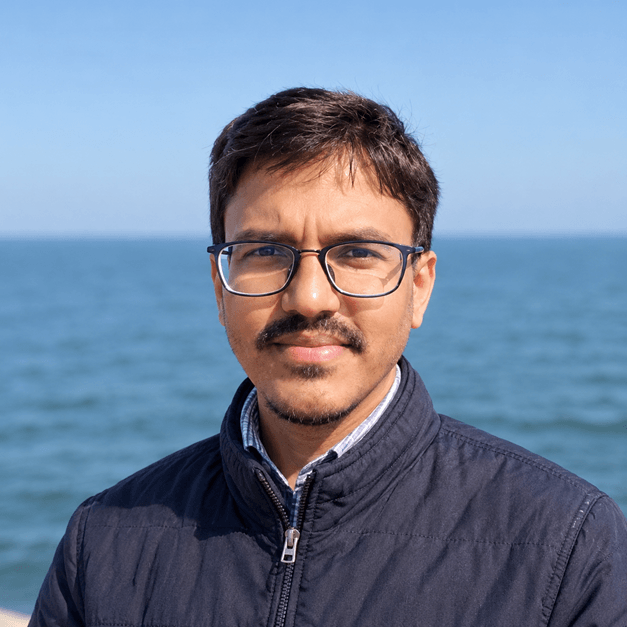
Izajul Haque
SEO, AEO & GEO consultant. I help businesses get discovered, understood, and cited across Google, AI Overviews, ChatGPT, and Perplexity. More about Izajul →
Try the related tools
Keep reading
Let's talk
Your next customer might not click a blue link — they'll ask an AI. Be the answer.
Book a free strategy call and I'll audit your visibility across Google, AI Overviews, ChatGPT, and Perplexity — then map out exactly what it takes to be found and cited.