Google Says GEO/AEO Isn't Separate From SEO — Here's What That Actually Means
Last verified: 2026-09-20. AI platform behavior changes frequently — verify current details on the respective platform's site.
Google has stated that optimization for AI search is not a separate discipline from SEO — the same fundamentals of quality content, technical health, and structured data apply, but content must also be structured for AI extractability and citation.
- Google's May 2026 guidance
- What "still SEO" actually means
- 1. The fundamentals haven't gone away
- 2. There is no separate "GEO algorithm"
- 3. Optimization is additive, not parallel
- Where the industry got it wrong
- What you should actually do
- Treat AI visibility as an SEO KPI, not a separate channel
- Audit for extractability, not just rankability
- Build one content strategy, not three
- Invest in the fundamentals harder than the tactics
- The practical takeaway
Key Takeaways
- Google May 2026 guidance states that optimizing for generative AI search is not a separate discipline — it is SEO.
- There is no separate GEO algorithm; AI Overviews synthesize answers from the same content signals used for traditional ranking.
- Siloing SEO, AEO, and GEO into separate teams leads to duplicate content, conflicting priorities, and wasted budgets.
- Treat AI visibility as an SEO KPI, audit for extractability alongside rankability, and build one unified content strategy.
- The best GEO strategy is a great SEO strategy executed completely — covering technical health, authoritative content, extractability, entity signals, and cross-surface visibility tracking.
Google's May 2026 guidance
In May 2026, Google published an official guide that said something a lot of SEOs didn't expect: optimizing for generative AI search is not a new discipline. It's SEO. The document pushed back against the industry's tendency to split search into silos — SEO here, AEO there, GEO somewhere else — and made the case that all of it lives under one umbrella.
For consultants and brands who've been treating GEO and AEO as separate budgets, separate teams, and separate strategies, this was a course correction. Google is saying: don't fragment your approach. The same fundamentals that helped you rank in 2019 are what help you get cited by an AI Overview in 2026.
But that doesn't mean nothing has changed. It means the additions sit on top of the foundation, not beside it.
What "still SEO" actually means
When Google says GEO is still SEO, they're making three specific claims:
1. The fundamentals haven't gone away
Crawlability, indexation, structured data, internal linking, content quality, authority signals — these still matter. AI Overviews pull from the same index that powers Google's traditional results. If your site isn't crawlable, if your schema is broken, if your content is thin, you won't appear in AI-generated answers either.2. There is no separate "GEO algorithm"
There's no distinct ranking system for AI Overviews that you optimize for differently. Google's systems synthesize answers from the same content signals they already use for ranking. The entities, the relevance, the authority — it's all the same infrastructure. You don't submit a separate GEO sitemap or build a separate GEO content hub.3. Optimization is additive, not parallel
You don't run an SEO strategy and a GEO strategy. You run one strategy that accounts for how content surfaces across different result formats — blue links, AI Overviews, featured snippets, and everything in between.Where the industry got it wrong
The SEO industry has a habit of rebranding every shift as a new discipline. We saw it with "mobile SEO," "voice search SEO," "local SEO," and now "AEO" and "GEO." Each of these describes something real — but treating them as separate disciplines leads to fragmented work, duplicated effort, and conflicting priorities.
Here's what happens when you silo:
- Duplicate content teams write overlapping articles because the "SEO team" targets keywords and the "GEO team" targets AI citations
- Conflicting technical priorities where one team pushes for schema and another pushes for page speed, when both matter
- Wasted budgets on "GEO-specific" tools and audits that duplicate what a good technical SEO audit already covers
- Inconsistent reporting where SEO reports rankings, GEO reports citations, and nobody connects the two
Google's guidance is essentially saying: stop doing that.
What you should actually do
Treat AI visibility as an SEO KPI, not a separate channel
Track when your brand appears in AI Overviews the same way you track rankings — as one of many visibility metrics under the SEO umbrella. Don't create a separate "GEO report." Add AI Overview appearances to your existing SEO dashboard.Audit for extractability, not just rankability
Traditional SEO audits check whether content can rank. The same audit should also check whether content can be extracted — clear question-answer patterns, concise definitions, structured data that makes content machine-readable. This isn't a separate audit. It's a section in your existing one.Build one content strategy, not three
Don't have an SEO content calendar, an AEO content calendar, and a GEO content calendar. Have one content strategy that produces authoritative, structured, extractable content. Every piece should work across all surfaces.Invest in the fundamentals harder than the tactics
The brands appearing in AI Overviews aren't the ones with the most "GEO tricks." They're the ones with the strongest technical foundations, the most authoritative content, and the clearest entity signals. That's SEO. It was always SEO.The practical takeaway
If you've been told you need a separate GEO strategy, a separate AEO budget, or a separate team for AI search — you don't. What you need is a complete SEO strategy, one that:
1. Covers technical health — crawlability, speed, schema, structured data
2. Produces authoritative content — original, comprehensive, citation-worthy
3. Optimizes for extractability — clear answers, FAQ schema, structured formats
4. Builds entity signals — consistent branding, sameAs links, knowledge graph presence
5. Tracks visibility across surfaces — rankings, snippets, AI Overviews, AI engine citations
That's one strategy with five dimensions, not five strategies with overlapping work.
Google's May 2026 guide wasn't saying GEO doesn't exist. It was saying GEO isn't a thing you do instead of SEO. It's a thing that happens when you do SEO well. The brands that understand that distinction will outperform the ones chasing every new acronym as a separate discipline.
The best GEO strategy is a great SEO strategy, executed completely.
Frequently Asked Questions
Yes. In May 2026, Google published an official guide stating that optimizing for generative AI search is not a new discipline — it is SEO. The same fundamentals that help you rank also help you get cited by AI Overviews.
No. There is no distinct ranking system for AI Overviews that you optimize for differently. Google synthesizes answers from the same content signals used for ranking — entities, relevance, and authority all come from the same infrastructure.
No. Google recommends against siloing. Separate teams lead to duplicate content, conflicting technical priorities, wasted budgets, and inconsistent reporting. Run one strategy that accounts for how content surfaces across all result formats.
Track AI Overview appearances the same way you track rankings — as one of many visibility metrics under the SEO umbrella. Add AI Overview appearances to your existing SEO dashboard rather than creating a separate GEO report.
A complete strategy covers technical health (crawlability, speed, schema), produces authoritative citation-worthy content, optimizes for extractability (clear answers, FAQ schema), builds entity signals (consistent branding, sameAs links), and tracks visibility across all surfaces including AI engines.
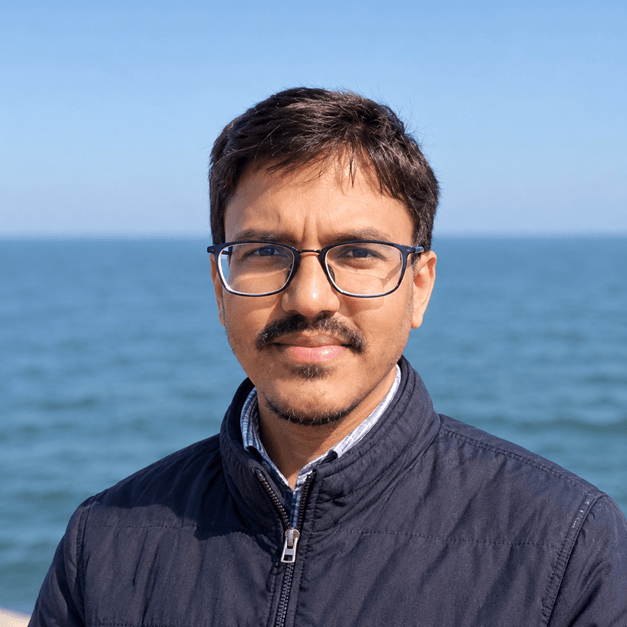
Izajul Haque
SEO, AEO & GEO consultant. I help businesses get discovered, understood, and cited across Google, AI Overviews, ChatGPT, and Perplexity. More about Izajul →
Try the related tools
Keep reading
Let's talk
Your next customer might not click a blue link — they'll ask an AI. Be the answer.
Book a free strategy call and I'll audit your visibility across Google, AI Overviews, ChatGPT, and Perplexity — then map out exactly what it takes to be found and cited.